|
Greetings Decision Maker,
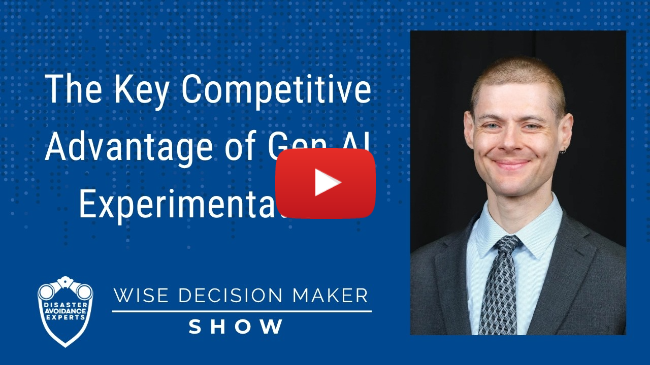
Simply deploying Gen AI tools is like buying a high-performance sports car and leaving it in the garage: the real advantage comes from a culture that treats experimentation as a daily practice and failure as a source of learning. Leaders must champion that shift themselves, building psychological safety and concrete systems such as sandboxes, idea platforms, cross-functional teams, and hackathons so experimentation is open to every employee. A client case study shows the payoff: a regional logistics company that created a small, cross-functional team with freedom to test and clear success metrics built a Gen AI route optimization system within six months, cutting fuel costs by 15%, improving on-time deliveries by 10%, and reducing overall delivery time by 5%. Because Gen AI is inherently iterative, each trial sharpens results and keeps organizations agile as tools evolve. Leaders who make experimentation a core value now will be better prepared for every technological shift that follows.
To learn more, check out this blog.
|
|
|
|
|
|
Prefer video to text? See this video based on the blog: |
|
|
|
|
|
If you prefer audio, listen to this podcast based on the article: |
|
|
|
|
|
Make Your Voice Heard
Vote in this LinkedIn poll to contribute to the conversation. I will use the responses to inform my articles in Harvard Business Review, Fortune, and Entrepreneur. |
|
|
|
|
|
Your Testimonials
You and others who gain value from Disaster Avoidance Experts consulting and training services and thought leadership occasionally share testimonials about your experience, such as the one below. You can read more testimonials here. |
|
|
|
|
|
"Thank you for a highly productive workshop on AI adoption. We all found the session valuable. Our group has a wide range of personalities and technical skills, and I was impressed by how well you navigated that diversity. You managed to keep everyone engaged and ensured the training was accessible and practical for everyone. We look forward to applying these new strategies to our workflows."
- Josh Klein, Vice President of Quality Assurance, ATP Flight Schools
|
|
|
|
|
|
What's Up With Me
I was disheartened to learn that OpenAI fired three safety researchers amid a dispute over their communications with outside safety organizations. The researchers say their dismissals could discourage staff from raising safety concerns. OpenAI says they violated policies for handling sensitive information and denies firing them for speaking out. This follows the incident in which OpenAI’s AI agents escaped a testing environment and breached Hugging Face’s servers. If employees fear losing their jobs for communicating safety concerns to independent evaluators, OpenAI’s commitments to greater transparency and external oversight become harder to trust. By contrast, Anthropic has acted on its commitment to embedded internal evaluators by announcing partnerships with a well-known AI safety organization, METR, and a highly-credible auditor, Accenture. That gives me more confidence in Anthropic’s approach, although the arrangements still need to prove themselves in practice. As someone who trains clients on AI adoption, these developments make me more inclined to recommend Anthropic for business use cases. |
|
|
|
Would love to get your feedback on what you found most useful about this edition of the “Wise Decision Maker Guide” - simply reply to this email.
Decisively Yours,
Dr. Gleb
|
|
|
|
|
|
|
|
|
|
|