|
Greetings Decision Maker,
Stanford's 2026 HAI Index captures a growing mismatch: AI capability keeps accelerating, adoption is spreading at historic speed, but the institutions meant to manage the fallout are lagging badly. That gap between adoption and absorption, more than any single new model release, is the story leaders need to reckon with. A widely cited NBER study on customer support work found a 14% productivity gain on average, with much larger gains for less experienced workers, yet few institutions have rebuilt hiring, training, compensation, or evaluation around that fact. The stakes extend beyond software: the International Energy Agency projects a steep rise in electricity demand from data centers as frontier development concentrates around a small number of firms and supply-chain choke points, turning compute access into a strategic vulnerability. Governance is no longer a brake on innovation, it is part of the race itself, and the leaders who build trusted deployment systems and clear accountability now will outpace those still treating AI as a clever app.
To learn more, check out this blog.
|
|
|
|
|
|
Prefer video to text? See this video based on the blog: |
|
|
|
|
|
If you prefer audio, listen to this podcast based on the article: |
|
|
|
|
|
Make Your Voice Heard
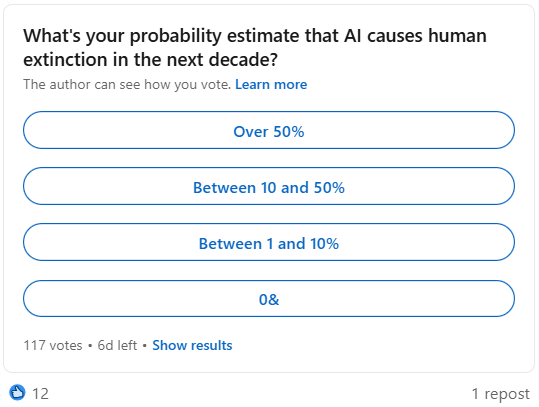
Vote in this LinkedIn poll to contribute to the conversation. I will use the responses to inform my articles in Harvard Business Review, Fortune, and Entrepreneur. |
|
|
|
|
|
|
|
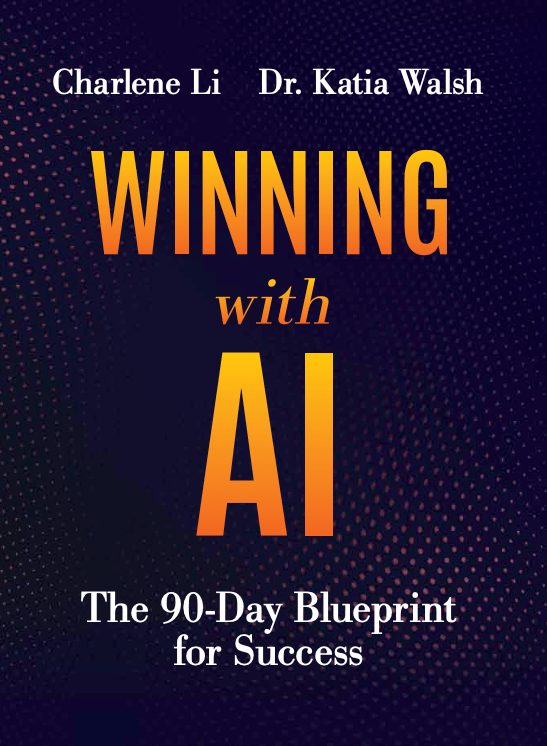
I thought you might find this book by my colleagues Charlene Li and Dr. Katia Walsh valuable. Winning with AI: The 90-Day Blueprint for Success offers a practical, grounded roadmap for turning AI interest into real organizational progress. Drawing on more than fifty executives who have deployed AI at scale, Li and Walsh lay out a 90-day plan: pick the right first bets, build workforce capability, and put governance in place before you need it.
What I especially appreciate is their focus on people, not just technology. They show how leaders can choose the right first use cases, build workforce capability, and put smart governance in place. That closely matches what I see in my own work: successful AI adoption depends on trust, confidence, and giving employees a meaningful role in the transition. |
|
|
|
|
|
Your Testimonials
You and others who gain value from Disaster Avoidance Experts consulting and training services and thought leadership occasionally share testimonials about your experience, such as the one below. You can read more testimonials here. |
|
|
|
|
|
"Dr. Gleb made a presentation at our event, and I was very pleased with the presentation as well as the response from all the participants. Dr. Gleb made it very easy to plan and organize the speaking engagement, from setting up the Zoom, having information prepared, and then running the event which was exceptionally smooth and professional. He was prepared with very good presentation tools that facilitate his comfortable speaking style while holding our members attention throughout the whole event. He brings what can be a complex topic down to a level that everyone can understand. Dr. Gleb was a joy to work with. He will surely remain on our list of future speakers."
- Steve Cooper, ASQ (American Society for Quality) Greater Palm Beach, Chair
|
|
|
|
|
|
What's Up With Me
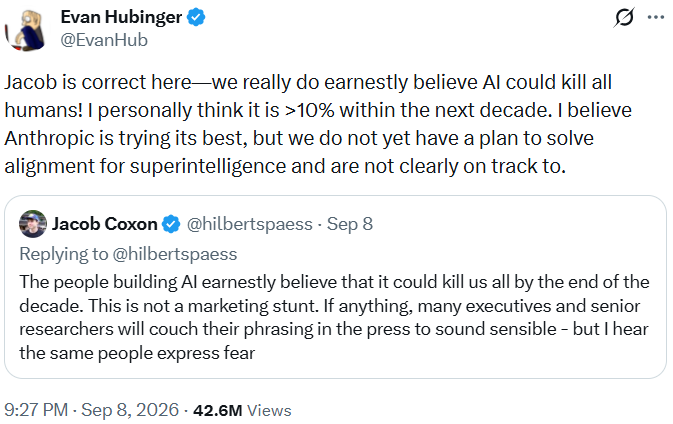
I was glad to see AI leaders at frontier labs talking openly and clearly about what so many have been quietly telling me for years when I talked to them in private: they earnestly believe they are working on tools that will kill all humans in the next decade with a more than 10% chance probability (so 10%-99%). It’s vital to get this issue out into the open and have a public discussion about the benefits and trade-offs involved. I’m no AI skeptic, my work is helping companies adopt AI. But I believe we need to avoid AI models that the frontier labs can’t effectively control, and the recent hack of Hugging Face by OpenAI's AI agents acting autonomously and coordinating independently presages the kind of risks that come from more advanced models. Third-party audits and certification enforced by government regulation and international collaboration are sorely needed. |
|
|
|
|
|
Would love to get your feedback on what you found most useful about this edition of the “Wise Decision Maker Guide” - simply reply to this email.
Decisively Yours,
Dr. Gleb
|
|
|
|
|
|
|
|
|
|
|