|
Greetings Decision Maker,
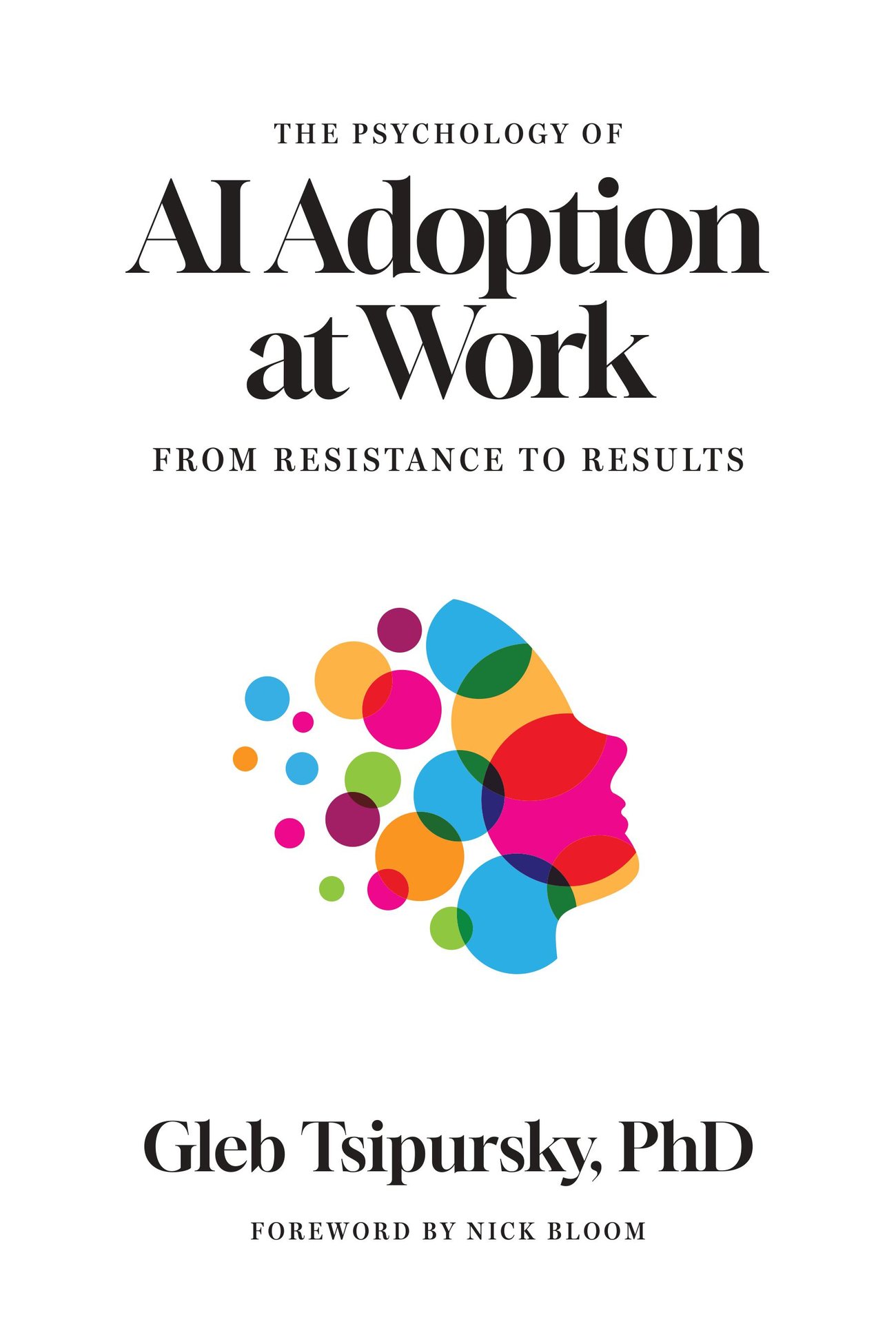
A new Brookings paper gives hard data to a long-standing fear: the United States is not just inventing more frontier AI, it is absorbing it faster than Europe. The authors find that 43% of U.S. workers use generative AI on the job, versus 32% across six European countries, and 5.2% of all U.S. work hours involve AI, roughly double the rate in northern Europe. The real driver is not access to models but management: in UK data, only 2% of firms in the bottom management decile had adopted AI, versus 20% in the top decile, and encouragement from management explains nearly all of the U.S.-Europe adoption gap. A one standard deviation rise in performance-oriented personnel management corresponds to a 9.6% point increase in AI adoption. For leaders, the lesson is that AI adoption is an organizational test, not a procurement exercise: firms that reward performance and redesign work to make the tools actually get used will be the ones who capture the productivity gains.
To learn more, check out this blog.
|
|
|
|
|
|
Prefer video to text? See this video based on the blog: |
|
|
|
|
|
If you prefer audio, listen to this podcast based on the article: |
|
|
|
|
|
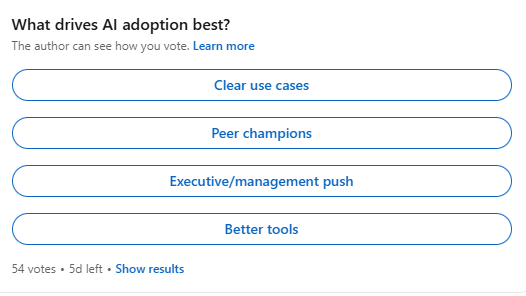
Make Your Voice Heard
Vote in this LinkedIn poll to contribute to the conversation. I will use the responses to inform my articles in Harvard Business Review, Fortune, and Entrepreneur. |
|
|
|
|
|
Your Testimonials
You and others who gain value from Disaster Avoidance Experts consulting and training services and thought leadership occasionally share testimonials about your experience, such as the one below. You can read more testimonials here. |
|
|
|
|
|
"Thank you for your insightful webinar presentation. Our members found the materials presented to be thought-provoking, engaging, and informative. Your points on normalcy bias, planning fallacy, and hyperbolic discounting really hit home among the attendees. Thank you again for helping to make our educational webinars so rewarding and a most worthwhile experience."
- Wei Tschang, CISA CISM CGEIT, Education Committee Chair, ISACA New York Metropolitan Chapter
|
|
|
|
|
|
What's Up With Me
Dealing with uncertainty can be really hard. For example, a lung issue has been hanging over me since June, when imaging found a 4.2-centimeter “cavitary lesion” in the lower lobe of my right lung. At first, the doctors thought infection was the most likely explanation and treated me with six weeks of antibiotics, with the plan to biopsy it if it failed to improve. By late July, the infectious explanation had become less convincing, and I started pushing to accelerate a biopsy because I was worried about the possibility of cancer. Now my pulmonologist is recommending that we wait for another CT scan instead. In her assessment, the lesion is in a difficult location to biopsy, and the procedure carries a high likelihood of causing a pneumothorax, the medical term for a collapsed lung. She thinks the better trade-off is to monitor it and see whether it grows before taking that risk. That recommendation leaves me with a lot of anxiety and uncertainty. My gut reaction is to accept the lung-collapse risk, get the biopsy over with, and finally know what I am dealing with. But I also have to recognize that this urge comes from wanting to eliminate uncertainty, rather than from the medical probabilities themselves. My pulmonologist understands the trade-off better than I do between the substantial and immediate risk of the biopsy and the smaller risk that, if this does turn out to be cancer, it could progress substantially during this additional period of monitoring. So I am trying to do something that is emotionally much harder for me than taking action: follow her advice, tolerate the uncertainty, and wait for the CT scan to give us more information. |
|
|
|
|
|
Would love to get your feedback on what you found most useful about this edition of the “Wise Decision Maker Guide” - simply reply to this email.
Decisively Yours,
Dr. Gleb
|
|
|
|
|
|
|
|
|
|
|