|
Greetings Decision Maker,
An eight-month field study inside a 200-person U.S. tech company published in Harvard Business Review lands on three takeaways that the authors present as a surprising result:
-
Work expands as AI lowers friction
-
Work bleeds across time boundaries as tasks become easier to start
-
Multitasking rises as people run parallel threads.
I disagree with the authors' posture that these results read as a surprise. When a system strips friction from routine tasks, employees fill the freed capacity with higher-level responsibility, broader coordination, and faster cycles, helping them have more job security if they navigate this transition effectively and also enabling them to have more autonomy and creativity in their work. Along with these benefits come problems: the sharpest downside lands on entry-level opportunity as starter tasks disappear, a labor-market pattern already showing up in early-career employment impacts.
To learn more, check out this blog.
|
|
|
|
|
|
|
Prefer video to text? See this video based on the blog: |
|
|
|
|
If you prefer audio, listen to this podcast based on the article: |
|
|
|
|
Make Your Voice Heard
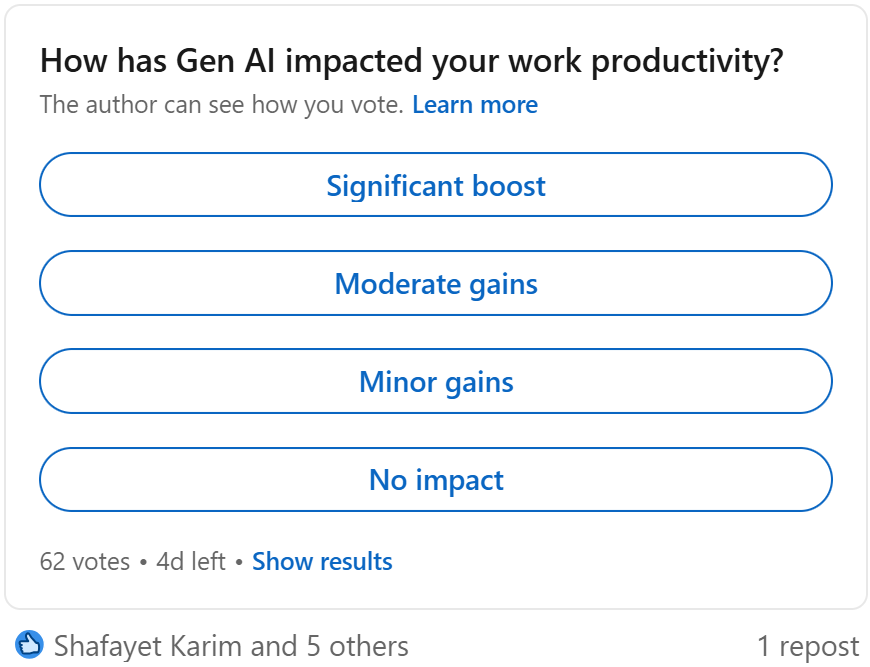
Vote in this LinkedIn poll to contribute to the conversation. I will use the responses to inform my articles in Harvard Business Review, Fortune, and Entrepreneur. |
|
|
|
|
Your Testimonials
You and others who gain value from Disaster Avoidance Experts consulting and speaking services and thought leadership occasionally share testimonials about your experience, such as the one below. You can read more testimonials here. |
|
|
|
|
"Dr. Gleb spoke for MPI Ohio on "Where Meeting Planners Should Start with AI: Practical, No Code Tools You Can Use Right Away." He shared AI concepts in a simple manner, shared a 7-Day Start Plan, and provided prompt examples that I will be able to use immediately. The webinar was tailored to our industry, and he shared relevant examples. I highly recommend Dr. Gleb to anyone who wants to learn about practical ways to incorporate AI into their daily work."
- Jane Lee, MPI Ohio Incoming President
|
|
|
|
|
What's Up With Me
I felt proud recently of a major civic accomplishment, namely publishing an op-ed in the biggest newspaper in Ohio with my story about how AI helped save me from making bad decisions about a blood clot after medical professionals gave me bad advice about how to proceed. I didn’t name and shame any medical professionals, or even their organizations, because that wasn’t my goal. My goal was to talk about AI as a tool for personal health understanding and advocacy. Because I train companies on how to adopt AI effectively, I know about AI usage that can be applied to one’s personal life. So I built an AI agent with all of my health and DNA data uploaded as a knowledge base, and instructions on how the AI tool should use that data to give me advice and help me advocate for myself in the medical system. While that tool proved its worth already before this incident, with the blood clots it proved to be a real potential life-saver, literally and not figuratively. And the reason I’m proud is that I’m hoping it will inspire other people to set up similar AI agents to protect their own health and advocate for themselves within the medical system. It can save their lives, as it potentially did mine. |
|
|
|
|
Would love to get your feedback on what you found most useful about this edition of the “Wise Decision Maker Guide” - simply reply to this email.
Decisively Yours,
Dr. Gleb
|
|
|
|
|
Dr. Gleb Tsipursky
CEO of Disaster Avoidance Experts
PS: Are we connected on LinkedIn? If not, please add me.
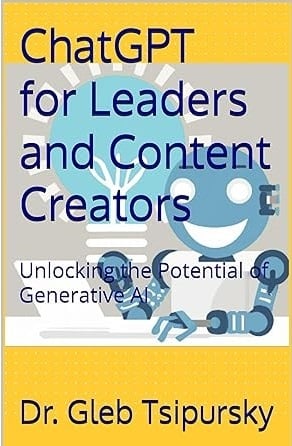
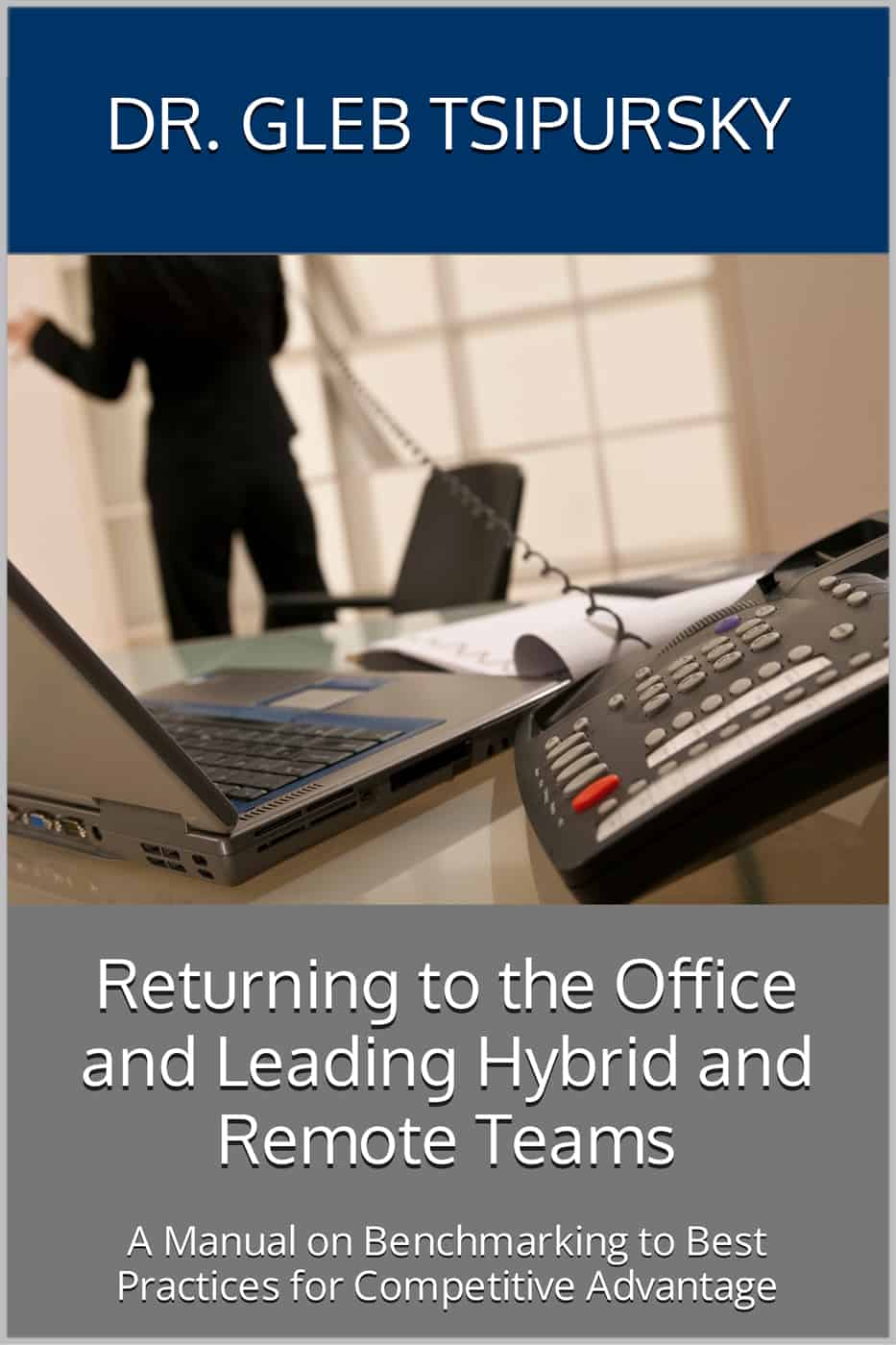
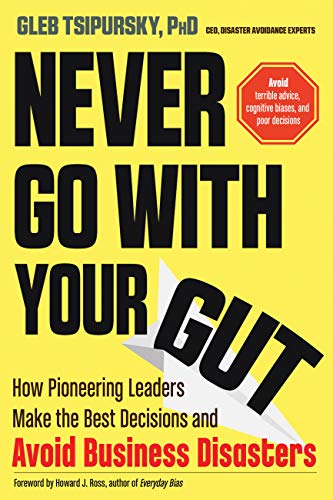
Did you miss out on reading any of my bestselling books? |
|
|
|
|
Disaster Avoidance Experts is a social enterprise dedicated to promoting science-based truth-seeking and wise decision-making. All profits are donated to Intentional Insights, an educational 501(c)(3) nonprofit organization, and its Pro-Truth Pledge project.
You're getting this email because you indicated that you wanted resources from Dr. Gleb or from Agnes Vishnevkin. |
|
|
|
|